
How Companies Are Fighting Online Counterfeiters Faster Than Ever

Online counterfeiting has quietly become one of the most serious risks for businesses that sell products online.
For e-commerce brands, retail companies, manufacturers, and even restaurants selling branded merchandise, counterfeit sellers can appear overnight. They copy logos, product photos, packaging, and brand names, often confusing customers and damaging trust. Beyond lost revenue, counterfeit products can hurt a company’s reputation and long-term brand value.
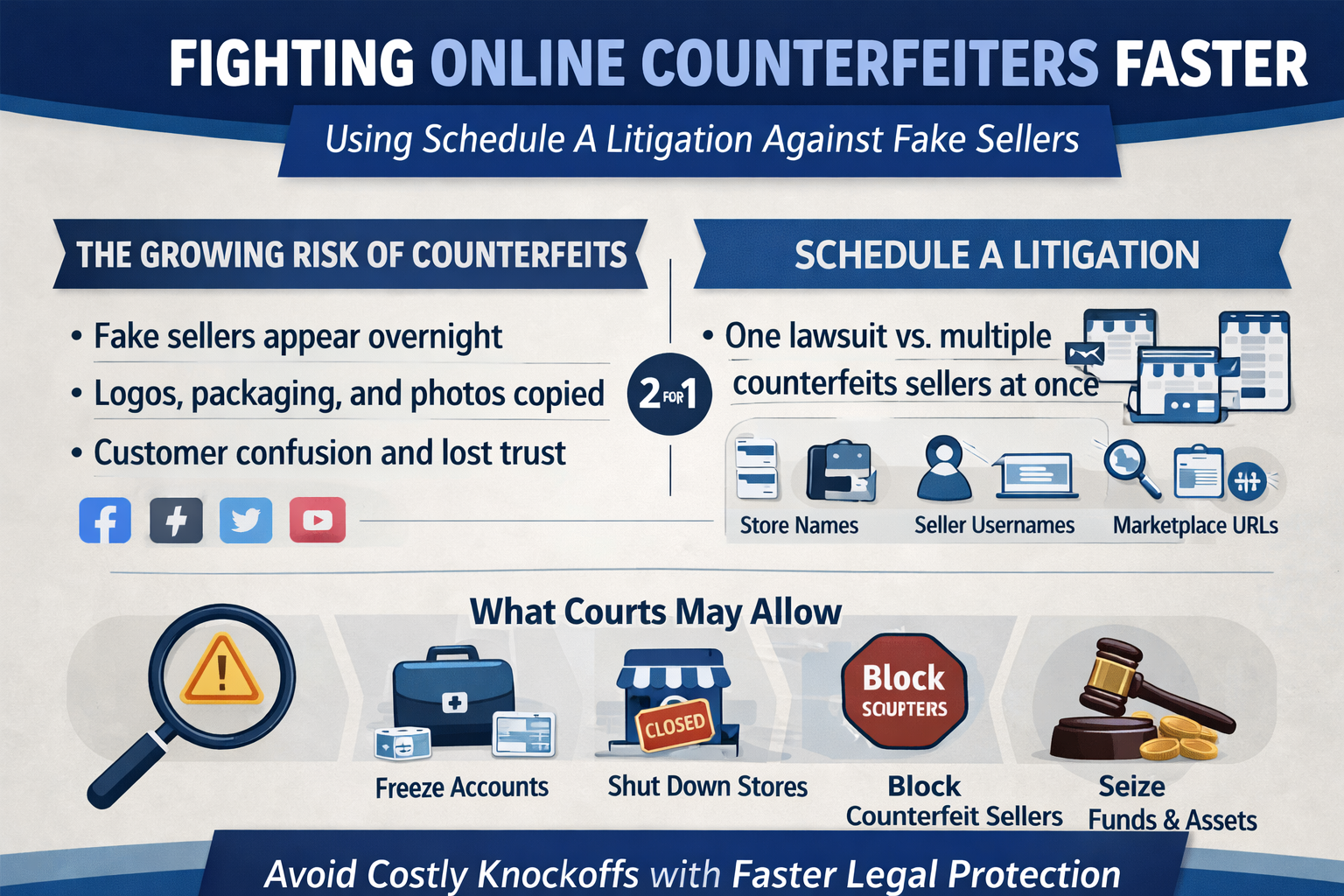
In response, companies are increasingly turning to a legal approach that allows them to act faster and more efficiently.
That approach is called Schedule A litigation.
What Is Schedule A Litigation?
Traditionally, enforcing trademark and brand rights online required filing lawsuits against counterfeit sellers one by one. This process was slow, costly, and often ineffective, especially when sellers used fake identities or reopened under new names.
Schedule A litigation allows companies to take a different path.
Instead of suing each seller separately, a business can file one consolidated lawsuit against multiple counterfeit sellers at the same time, even when their real identities are unknown.
These sellers are listed in a document known as “Schedule A,” which may include:
- Online store names
- Seller usernames
- Marketplace URLs
- Websites offering counterfeit goods
This structure allows courts to respond quickly before counterfeit sellers disappear or move their funds.
Why Courts Allow This Strategy
Online counterfeiters often operate in ways that make traditional enforcement difficult. Many:
- Use anonymous or false identities
- Sell through multiple platforms simultaneously
- Move funds quickly across accounts
- Shut down and reopen storefronts under new names
Because of these realities, courts recognize the need for faster intervention. Schedule A litigation gives judges the ability to issue early orders that limit ongoing harm to legitimate businesses.
What Can Courts Do in Schedule A Cases?
When Schedule A litigation is filed, courts may issue early orders that allow companies to:
- Freeze counterfeit sellers’ payment accounts
- Shut down online storefronts
- Stop the sale and distribution of counterfeit goods
- Order the destruction of counterfeit inventory
- Award damages in certain cases
These early measures are often critical in stopping counterfeit activity before it spreads further.
Why This Matters for Corporate Clients
Schedule A litigation is especially relevant for:
- E-commerce companies
- Retail and consumer product brands
- Restaurants and hospitality businesses selling branded products
- Manufacturers protecting trademarks and designs
- Companies with strong brand recognition
For corporate clients, this approach can offer:
- Faster enforcement
- More efficient legal action
- Reduced long-term costs
- Stronger brand protection
- Clearer control over online marketplaces
It also signals to counterfeit sellers that the company actively protects its intellectual property.
When Should a Company Consider This Option?
A business may want to explore Schedule A litigation if it notices:
- Repeated counterfeit listings online
- Unauthorized use of brand names or logos
- Sellers reappearing after takedown requests
- Customer confusion or complaints about product authenticity
Early review and planning can make enforcement significantly more effective.
Online counterfeiting is no longer an occasional issue. For many companies, it is an ongoing business risk.
Schedule A litigation provides a practical and efficient legal path for companies that want to protect their brand, customers, and revenue without pursuing countless individual cases.
If your company has noticed suspicious sellers, copied branding, or unauthorized online listings, an early legal review can help clarify your options before the issue grows.
Our team supports businesses in evaluating brand protection strategies and enforcement paths that fit their size and industry.
If you would like to discuss your situation, you may contact Potente to schedule a confidential consultation.