How Companies Are Using AI in Contracts and What They Should Watch For
- December 29, 2026
- Blog
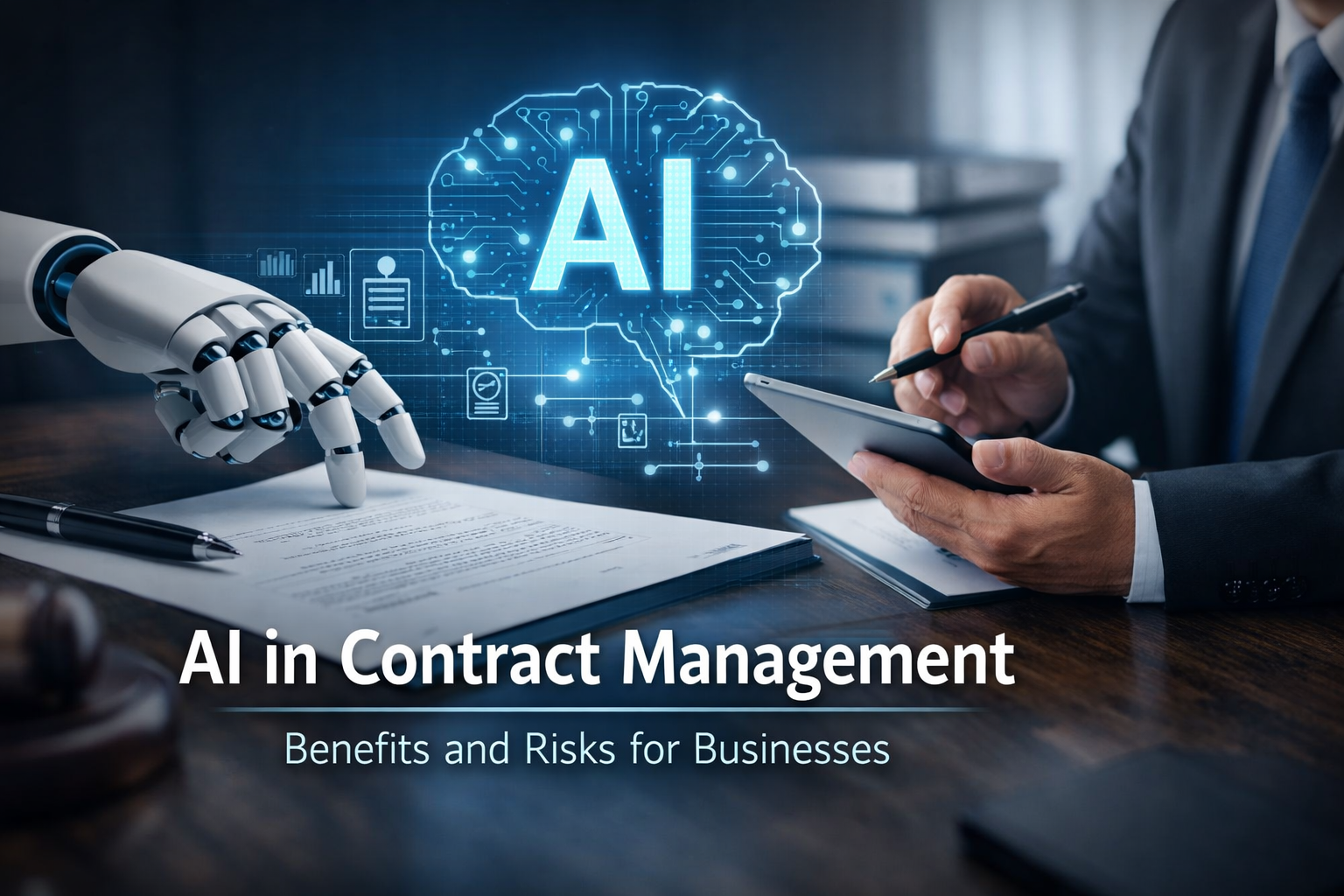
Artificial intelligence is quickly becoming part of everyday business operations. Many companies now use AI tools to draft contracts, review agreements, flag risks, and speed up negotiations.
While these tools can save time and reduce costs, they also raise important legal and operational considerations. Understanding how AI fits into contract management can help businesses benefit from efficiency without creating unnecessary risk.
How Businesses Are Using AI in Contract Work
AI tools are increasingly used to support tasks that were once fully manual. Common examples include reviewing large volumes of contracts, identifying missing clauses, comparing agreements against templates, and summarizing key terms for internal teams.
For fast-moving companies, this can significantly reduce turnaround time. However, AI is still a tool, not a decision-maker, and its output depends heavily on how it is used and supervised.
Where Legal Risks Can Appear
AI systems do not understand context the way people do. They rely on patterns, training data, and assumptions that may not always reflect a company’s specific situation or industry requirements.
Issues can arise when AI-generated contract language is used without proper review, when confidential information is shared with third-party tools, or when automated decisions are treated as legally final. Overreliance on AI can also lead to inconsistencies across agreements.
Why This Matters for Corporate Clients
Contracts define relationships with customers, vendors, landlords, employees, and partners. Even small errors or unclear terms can create long-term exposure.
For companies operating across multiple states or countries, AI-generated language may not fully account for local legal requirements. What works in one jurisdiction may create compliance issues in another.
Using AI as a Support Tool, Not a Substitute
Many companies are finding success by using AI as a first step rather than a final authority. AI can help organize information, highlight issues, and improve efficiency, while legal professionals provide review, judgment, and strategic guidance.
This balanced approach allows businesses to move faster while maintaining control over legal risk.
What Companies Can Do Now
As AI tools become more common, businesses may benefit from setting internal guidelines on how AI is used in legal and contract work. Clarifying approval processes, protecting sensitive data, and ensuring human review remain essential.
Early planning can help companies adopt new technology confidently without compromising compliance or consistency.
AI is changing how contracts are created and managed, but it does not replace the need for legal oversight. Companies that approach AI thoughtfully will be better positioned to gain efficiency while protecting their interests.
As technology continues to shape contract management, an early review of internal processes can help clarify risks and best practices. Our team supports businesses in evaluating contract workflows and legal safeguards as new tools are adopted.
If you would like to discuss your situation, please contact Potente to schedule a confidential consultation